 EN
EN

Core Technical Distinction: Foldable House vs Folding House
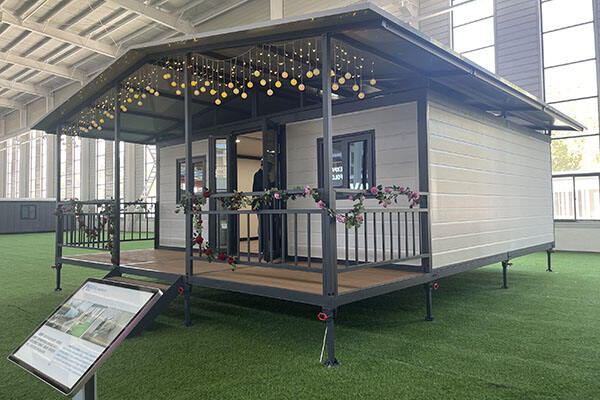
Kinematic Folding Mechanisms in Foldable Houses
Foldable houses use engineered hinge systems that allow walls, floors, and roofs to collapse into a compact transport profile. This design makes transportation easier and supports fast deployment on site. Most units can be unfolded and prepared for use in a short time through manual, hydraulic, or electric operation. In many cases, utilities such as electrical conduits and plumbing lines are pre-installed within the structural panels to reduce on-site work. As the unit unfolds, interlocking components help create rigid, load-bearing connections designed to improve overall structural stability.
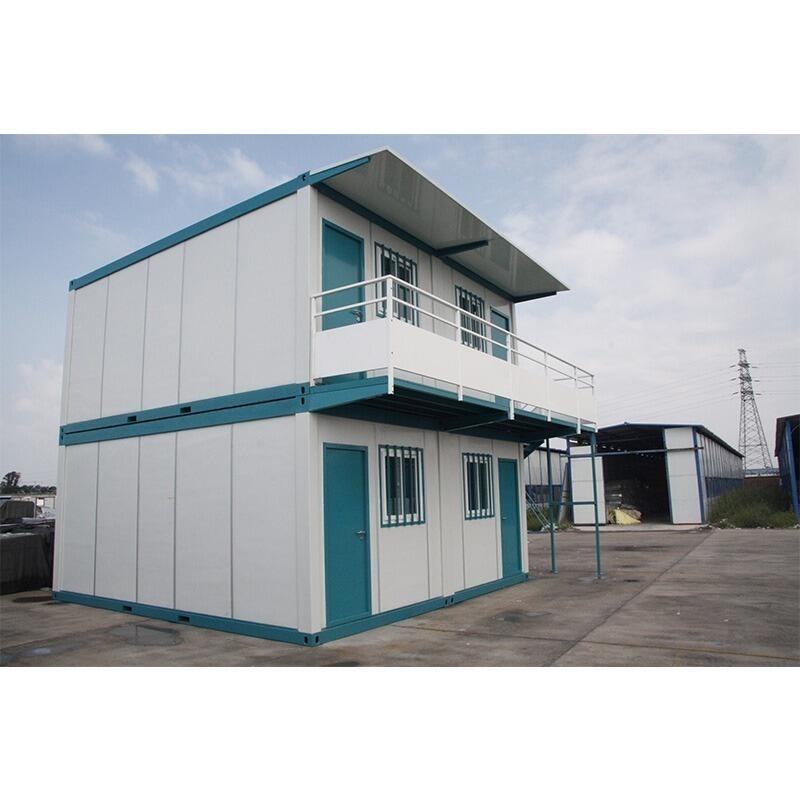
Geometric Compaction and Modular Stacking in Folding Houses
Folding houses reduce transport volume through detachable, stackable sub-assemblies rather than continuous hinge systems. Walls and roof sections can be separated and stacked for shipping, similar to modular containerized units. On-site reassembly usually requires lifting equipment and bolted connections, and installation time may vary depending on the model and project requirements. Their design often prioritizes container compatibility, which helps simplify transport and handling. Unlike foldable units, folding houses typically retain panel boundaries that require sealing at the joints during installation. This modular approach also supports hybrid configurations, allowing multiple units to be combined after deployment to create larger and more flexible spaces.
Deployment Speed and Operational Readiness
In field applications, foldable houses are often faster to set up than folding houses, especially when quick occupancy is a priority. Their synchronized unfolding process helps reduce installation time and makes them suitable for time-sensitive projects such as emergency response, temporary housing, and remote-site accommodation. Folding houses usually require a more sequential setup process, which can increase labor needs and make installation more sensitive to site conditions and weather.
Mechanical Simplicity and Human-Operated Erection Requirements
Foldable houses are designed for simplified deployment and can often be installed by a small trained crew. Their workflow is generally straightforward, which helps reduce training requirements and improve on-site efficiency. Folding houses, by contrast, may require a larger team and more technical supervision to ensure proper alignment and secure fastening. This makes foldable systems especially practical in remote areas or labor-constrained environments where speed and simplicity are important.
Logistics, Mobility, and Site Integration
Folding houses are designed to improve logistics efficiency through compact stacking and standardized transport dimensions. This helps reduce shipping complexity and makes it easier to transport multiple units to remote locations. Many models can be deployed directly from containers, reducing the number of handling steps required on site. Foldable houses, meanwhile, offer strong site adaptability thanks to their kinematic structure. They can be configured for a range of terrain and foundation conditions, making them suitable for projects where flexibility and rapid setup are important.
Structural Integrity, Standards, and Real-World Reliability
Foldable and folding houses achieve structural reliability through different engineering approaches. Foldable houses rely on load-bearing hinge mechanisms designed to support repeated deployment, while folding houses depend on modular component connections and panel stability. Both systems can be engineered to perform well in a range of environments, including areas with wind, snow, seismic activity, or flood-related challenges. Their long-term performance depends on factors such as material quality, structural design, anchoring method, and proper installation. When built and installed correctly, both types can offer durable and practical solutions for temporary or long-term use.
FAQ Section
What is the main difference between foldable and folding houses?
The main difference lies in their mechanisms and assembly processes. Foldable houses use engineered hinge systems allowing for quick deployment and pre-installed utilities, whereas folding houses require assembling detachable, stackable sections with more extended setup times.
How long does it take to deploy each type?
Foldable houses can be deployed in under four hours, typically faster than folding houses, which take approximately 8-12 hours.
Are foldable houses more adaptable to different terrains?
Yes, foldable houses offer exceptional site adaptability, supporting stable installations on various terrain and foundation types.
How do logistics and transportation differ between foldable and folding houses?
Folding houses are designed for ISO container compatibility, maximizing logistics efficiency for transport. Foldable houses focus on compactness during transport, enabling quick deployment on-site.