EN
EN

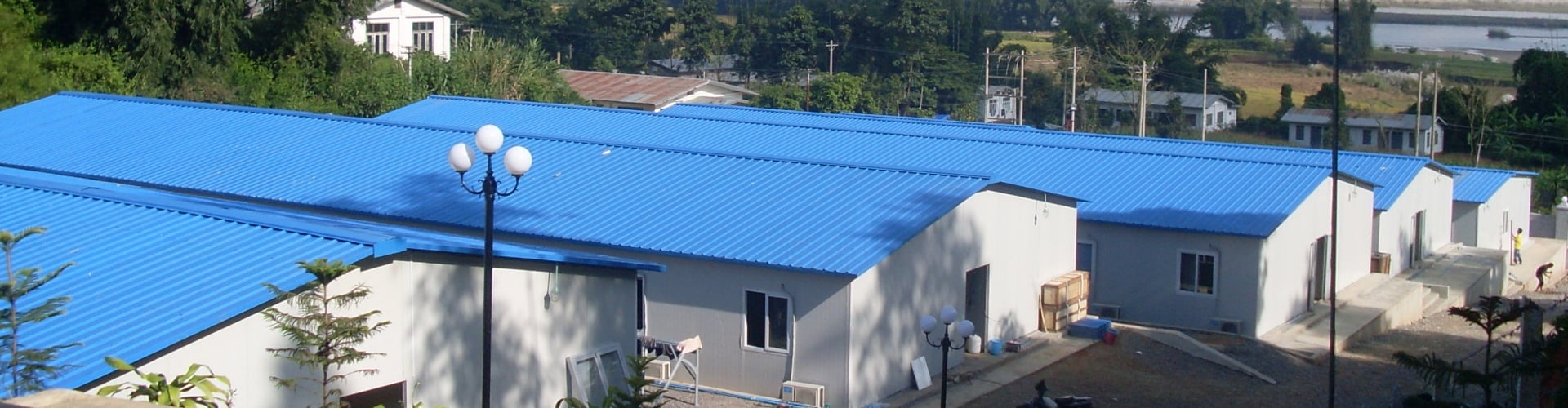
Relocatable Modular Camps: ROI for Multi-Phase Projects
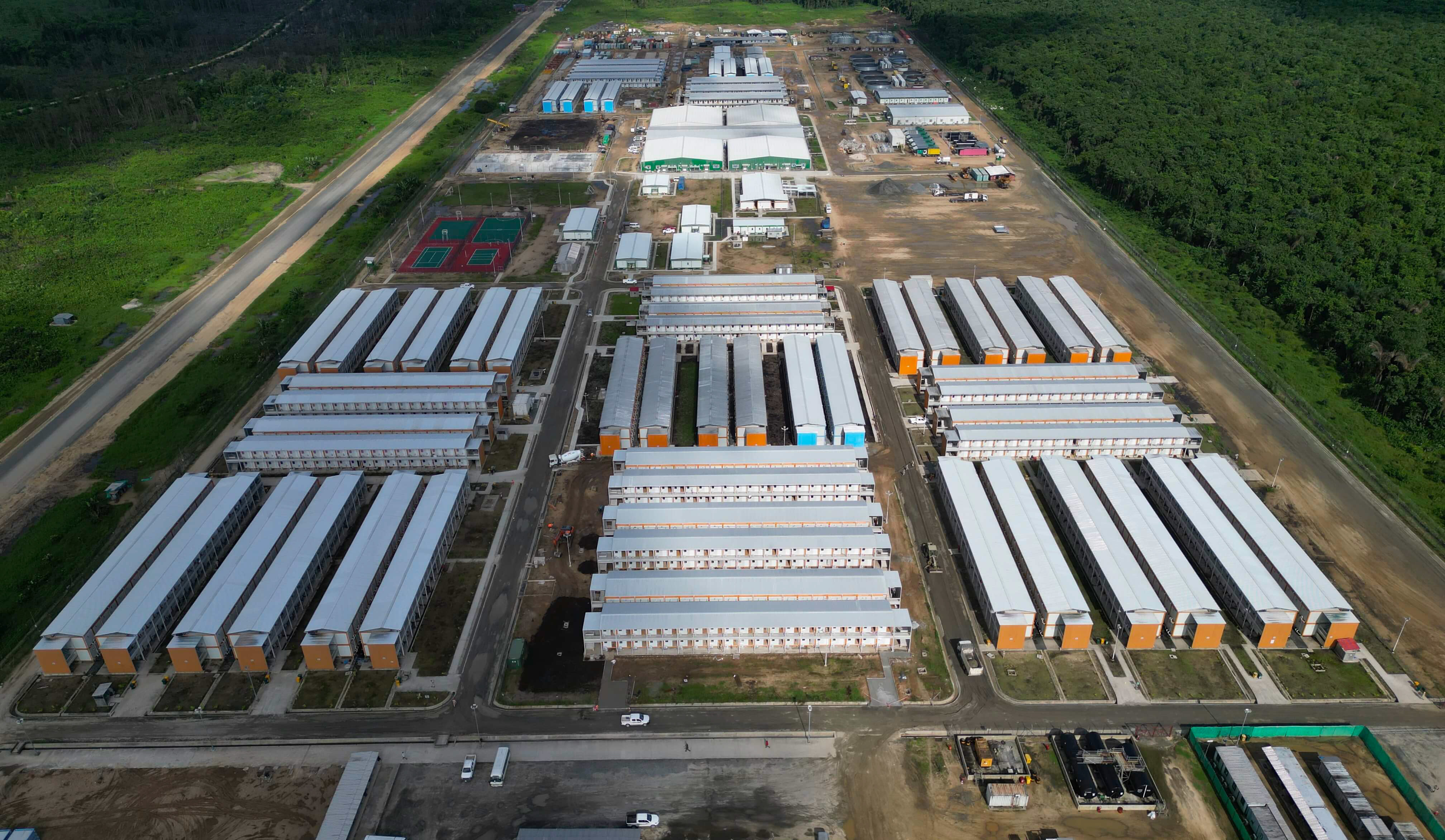
Most contractors buy a worker camp, use it once, and demolish it. On a multi-phase or serial-project programme, that habit quietly destroys millions in capital. A relocatable modular camp flips the model: the same dormitories, offices, kitchens and ablution blocks are engineered to be dismantled, shipped and re-erected on the next site — turning temporary site accommodation from a write-off into a reusable balance-sheet asset that typically cuts total accommodation cost by 35–50% over three projects.
This guide explains what makes a camp genuinely relocatable, which flat pack accommodation units and container modules do the work, how a relocation actually unfolds week by week, and what the return on investment looks like with real numbers — drawn from CDPH's experience delivering workforce accommodation in more than 100 countries.
1. Why Camp Economics Decide Project Bids
On tenders for mining, energy and infrastructure work, camp cost rarely loses a bid on its own — but it regularly erodes one. The reason is structural: camps are treated as a per-project expense, rebuilt from scratch every time, while their true cost is measured across the whole programme.
The more projects a contractor runs, the more value shifts from the purchase price of one camp to the lifecycle economics of a camp fleet. That is the trade a well-engineered relocatable camp makes — and why contractors running serial mining, oil and gas and infrastructure programmes increasingly treat workforce accommodation as equipment, not as a consumable.
2. What Makes a Camp Genuinely RelocatableRe-erection of a prefabricated modular dormitory cabin at a new project site — one crane, one small crew.
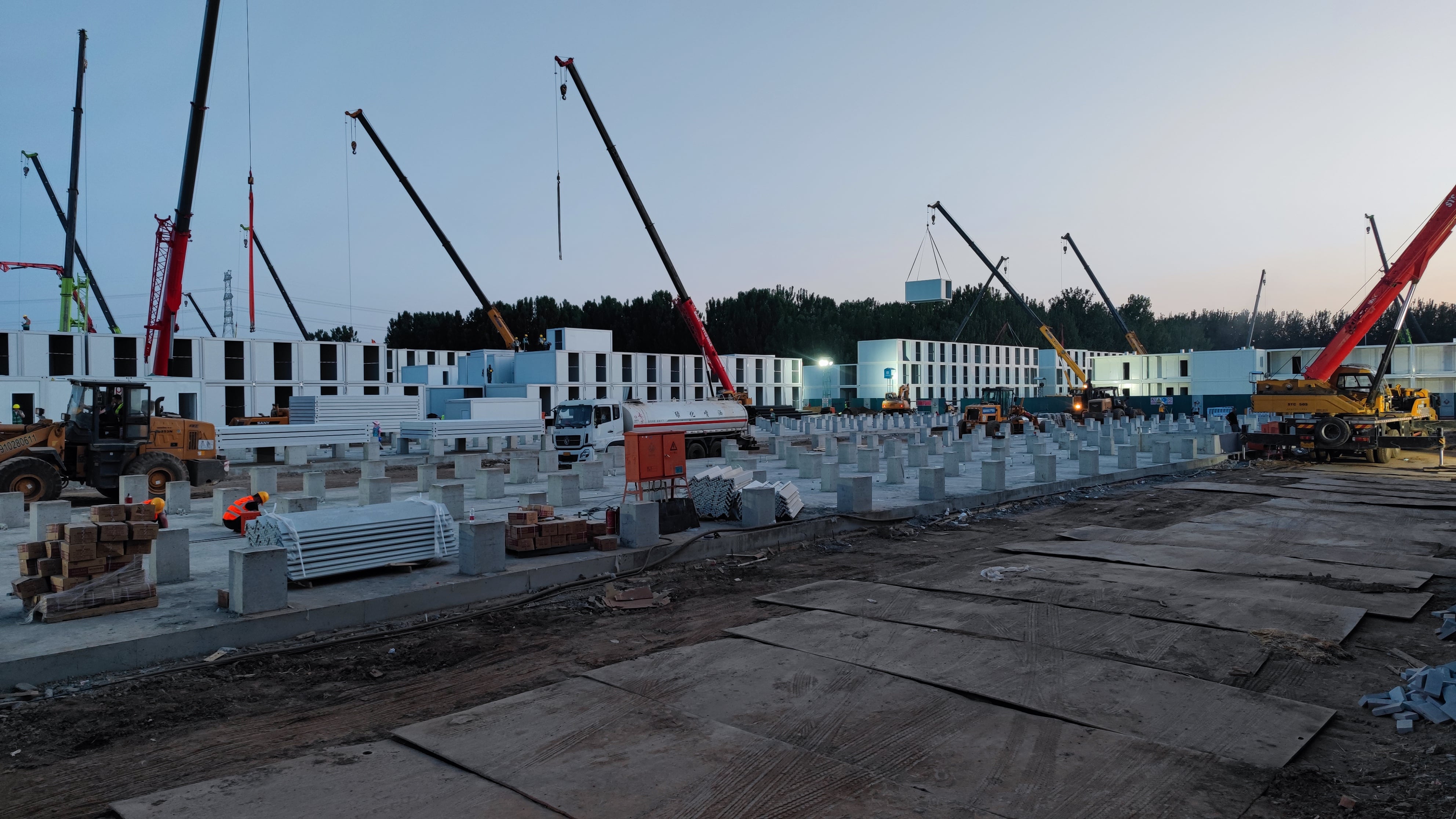
Not every prefab building survives a second erection. Relocatability is designed in from the first sketch, and it rests on five principles:
- Through-bolted connections, not site welds. Every structural joint is a bolted connection specified for repeated assembly and disassembly, per execution-class steelwork practice. Welded frames crack coatings and lose strength at each cut-and-re weld; bolted frames do not.
- Liftable, stackable modules. Units carry reinforced corner castings and frame points rated for repeated crane lifts and road transport, so handling is routine logistics rather than delicate surgery.
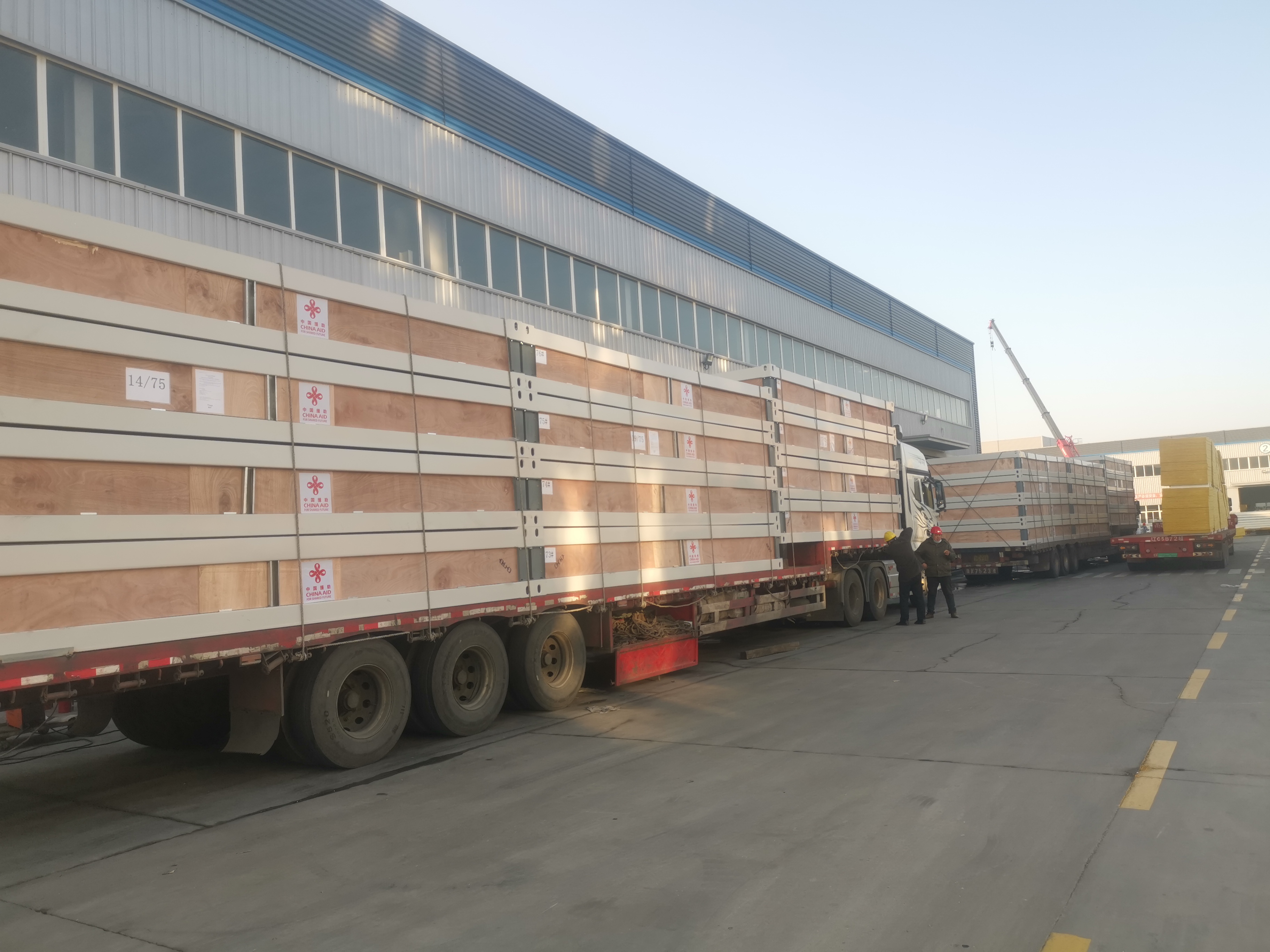
- Flat-pack panel construction for volume scope. Dormitory walls, roofs and floors ship as nested flat-pack bundles — a 40 m container carries the envelope of a full sleeping block, slashing freight cost per bed.
- Standardized utilities. Electrical, water and drainage interfaces use the same connector positions across every unit in the fleet, so re-erection is plugging in, not re-engineering.
- Recoatable steel envelope. The structure is blasted and coated in the factory with a system selected per the harshest environment on the programme — up to C5-M for coastal and offshore-adjacent projects — and can be re-coated between deployments instead of replaced.
A camp built on these principles is designed for 3–5 full relocation cycles over a 15–20 year service life. A camp built without them is disposable no matter what the brochure says.
3. The Relocatable Product RangeFlat-pack accommodation unit bundles loaded for container shipping — the high-volume, low-freight way to move a camp.
A complete camp is a fleet of complementary unit types. CDPH delivers the full range from one engineering platform, all relocation-grade:
- Flat pack accommodation units — the workhorse for worker dormitories and modular labour room blocks; nested panels minimize shipping volume and a four-person crew erects a sleeping block in days
- Container dormitories and accommodation containers — ISO-corner dormitory container house units for fast lift-and-shift deployment, available as accommodation containers for sale individually or as full camp scopes
- Volumetric wet modules — factory-fitted kitchens, dining halls, ablution and laundry blocks where plumbing is pre-installed, tested and commissioned before shipping
- Portable office accommodation — site offices, meeting rooms, clinics and control rooms as relocatable single units or linked multi-unit suites
- Recreation and welfare buildings — gyms, canteens, shops and activity rooms that keep a remote workforce stable and retained
- Steel warehouses and dry stores — bolted clear-span stores that relocate with the same logic as the camp around themDormitory interior of a relocatable modular unit — insulated, air-conditioned and furnished for remote workforce accommodation.
Procuring the whole fleet from one supplier has a practical benefit beyond price: interfaces are designed, not negotiated. Dormitories, kitchens, offices and warehouses share connection logic, utility routing and detailing standards — and arrive on one coordinated delivery plan per project phase.
4. Relocation Workflow and TimelineThe same camp re-erected at its second project location — a gold mine in Africa.
Relocation is a planned logistics operation, not a salvage job. For a 300-person camp, the typical programme looks like this:
|
Phase |
Duration (300-person camp) |
Key activities |
|
Condition survey & dismantling plan |
1 week |
Structural and coating inspection, unit tagging, packing sequence, refurbishment list |
|
Dismantling & packing |
1–2 weeks |
Unit disconnection, panel bundling, MEP capping, moisture protection, container loading |
|
Transport to next site |
1–3 weeks (distance-dependent) |
Road haulage or sea freight of flat-pack bundles, container modules and steel stores |
|
Foundations & re-erection |
2–3 weeks |
Gravel pads or adjustable footings, unit placement, panel assembly, utility hook-up |
|
Recommissioning & handover |
1 week |
MEP testing, coating touch-up, punch list, occupancy handover |
Total: roughly 5–9 weeks from close-out to re-occupancy. The decisive advantage over new procurement is that no factory queue is involved — the camp already exists and moves straight into logistics. And because the units are standardized, the same erection crews and lifting plans repeat on every deployment, with predictable quality.
5. The ROI Case: One Camp, Three Projects
Relocation economics are easiest to see with a worked model. The comparison below uses an illustrative 300-person camp deployed on three successive projects over seven years, with costs indexed to one new single-use camp = 100 per project. Actual figures vary by scope and region — CDPH's design team models each client's programme specifically — but the structure of the result is robust:
|
Cost element |
Buy-new per project (3 × single-use camps) |
Relocatable camp (buy once, redeploy ×2) |
|
Camp supply (indexed) |
100 + 100 + 100 = 300 |
130 (one relocation-grade purchase, ~25–30% premium) |
|
Dismantle & re-erect |
— (included in demolition write-off) |
24 (2 × 12) |
|
Transport between projects |
— |
12 (2 × 6) |
|
Refurbishment & re-coating |
— |
10 (2 × 5) |
|
Programme total |
300 |
176 — ≈41% lower |
|
Residual value at programme end |
0 |
≈45% of initial purchase — saleable, rentable or deployable again |
Three second-order effects strengthen the case further. Schedule: skipping the factory queue at each new phase protects mobilization dates, and in bid terms a proven, immediately available camp fleet is a competitive differentiator. Consistency: identical units mean identical maintenance, spare parts and erection methods across the programme. Budgeting: accommodation cost converts from three lumpy, uncertain procurements into one amortized asset with predictable relocation costs — which finance teams and auditors invariably prefer.
6. Design Decisions That Protect Residual Value
A relocatable camp is only an asset if it survives its journeys in condition. The specification decisions that protect value across relocations:
- Corrosion protection for the harshest stop on the route. The coating system is selected per ISO 12944 for the most aggressive environment the fleet will touch — C4 or C5-M for coastal and industrial exposure, with hot-dip galvanized secondary steel — so a camp that serves a desert project then a coastal one does not age prematurely.
- Cold-grade and climate packages where needed. -50°C cold packages with 100–150 mm insulated panels, desert UV-stable systems and high-plateau packages are selectable per project, applied at the factory rather than patched in the field.
- Connection wear management. Bolted joints and corner castings are specified for repeated cycles and inspected at every survey; consumable fasteners are replaced, structural members are not.
- Documentation as part of the product. Every unit carries its erection drawings, load ratings, utility schedules and coating records — the dossier that makes the third deployment as fast as the first, and supports residual value at resale.
- Standardized spares across the fleet. One panel profile, one window type, one door hardware set fleet-wide halves the refurbishment inventory a contractor has to hold.
The underlying principle: design for the fleet's whole life, not for project one. That is what separates a relocatable camp from a cheap cabin that merely looks portable.
7. Proven Across 100+ Countries
Relocation economics are proven in the field, not on spreadsheets. Across more than 100 countries and 5,000+ delivered projects, CDPH workforce accommodation camps and steel buildings operate on mining, energy and infrastructure sites worldwide — from coal-fired power projects in Pakistan to oil and gas fields in the Middle East, mining camps across Africa and Central Asia, and island resorts in the Indian Ocean, where every structure arrives by barge and nothing can be built conventionally.
Because the same engineering platform covers the full climate spectrum — -50°C extreme cold, desert heat, high plateau and C4/C5-M coastal corrosion — a contractor can standardize one relocatable camp fleet and deploy it from a Saharan solar site to a coastal LNG terminal without re-engineering the product between stops.
8. Why Contractors Choose CDPH
- 3 large intelligent production factories — capacity headroom that protects your schedule, with batch-to-batch welding and coating consistency that field fabrication cannot hold
- 100+ professional designers — full structural and MEP engineering plus camp master planning, including the relocation sequencing and utility standardization a fleet strategy requires
- 100+ countries, 5,000+ projects delivered — references across mining, oil and gas, power and infrastructure sites on five continents
- Extreme-environment engineering as standard — -50°C cold packages, desert packages, high-plateau packages and C4/C5-M marine corrosion packages selectable per project and per deployment
- Complete site infrastructure from one supplier — flat-pack accommodation units, container dormitories, offices, kitchens and steel warehouses on one coordinated delivery plan, engineered to move together
Frequently Asked Questions
What is a relocatable camp?
A relocatable camp is a workforce accommodation camp engineered from bolted, modular components — flat-pack panel units, container-based dormitories and volumetric modules — designed to be dismantled, transported and re-erected on a new site rather than demolished at project end. Factory-finished units with matched connections preserve most of the camp's value across relocations.
How many times can a modular camp be relocated?
A properly engineered relocatable modular camp is typically designed for 3–5 full relocation cycles over a 15–20 year service life. The limiting factors are coating condition, connection wear and panel edge integrity — which is why camp-grade units use through-bolted frames, reinforced corner castings for lifting, and recoatable steel envelopes, with a condition survey before each move.
How long does it take to relocate a labour camp?
For a 300-person camp: 1 week for the survey and dismantling plan, 1–2 weeks to dismantle and pack, 1–3 weeks of transport, and 2–3 weeks for foundations and re-erection — roughly 5–9 weeks total. No factory queue is involved, because the camp already exists and moves straight into logistics.
Is a relocatable camp cheaper than building new each time?
Across three or more projects, typically 35–50% lower total cost of ownership. A relocation-grade camp carries a purchase premium of roughly 25–30% over a single-use camp, repaid from the second deployment onward — and the camp still holds residual value at the end of the programme.
Which buildings in a camp can be made relocatable?
The full camp scope: worker dormitories, site offices, kitchens and dining halls, ablution and laundry blocks, clinics, recreation buildings, dry stores and steel warehouses. Flat-pack panel units handle the high-volume dormitory scope most economically, while container-based and volumetric modules suit wet cells, kitchens and offices with factory-fitted MEP.
Plan a Relocatable Camp Fleet for Your Programme
If you are running a multi-phase mine, an energy programme or a serial construction portfolio, send CDPH your workforce numbers, project sequence and target mobilization dates. Our design team will return a camp fleet proposal — unit mix, flat-pack versus container split, relocation workflow and a programme-specific ROI model — typically within one week. Talk to a relocatable camp specialist today and stop paying for the same camp twice.