EN
EN

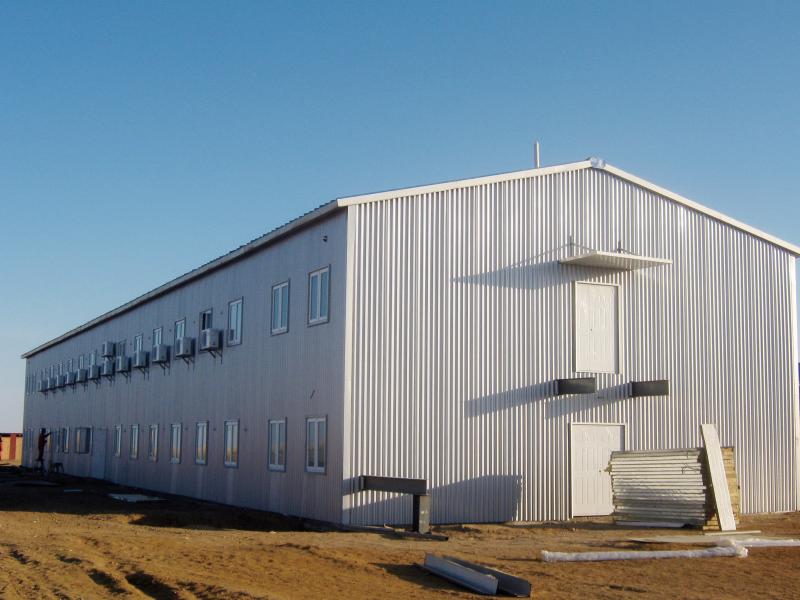
Why Steel Warehouses Deliver Unmatched Structural Speed
Steel warehouses achieve accelerated construction through optimized framing systems and precision manufacturing. The choice between cold-formed and hot-rolled steel directly determines erection efficiency—while comparative data confirms decisive advantages over traditional concrete methods.
Cold-Formed vs. Hot-Rolled Steel: How Framing Choice Impacts Erection Timeline
Cold-formed steel (CFS) components arrive pre-punched and pre-cut for rapid bolted assembly, reducing on-site labor by up to 35% compared to hot-rolled alternatives. Its lightweight profile enables faster crane handling and eliminates field welding—critical for single-story warehouses under tight deadlines. Hot-rolled steel (HRS), while better suited for heavy-load applications like multi-level logistics hubs, extends timelines due to complex field welding and custom-fit requirements. For speed-critical projects, CFS typically completes structural framing 2–3 weeks faster than equivalent HRS frameworks.
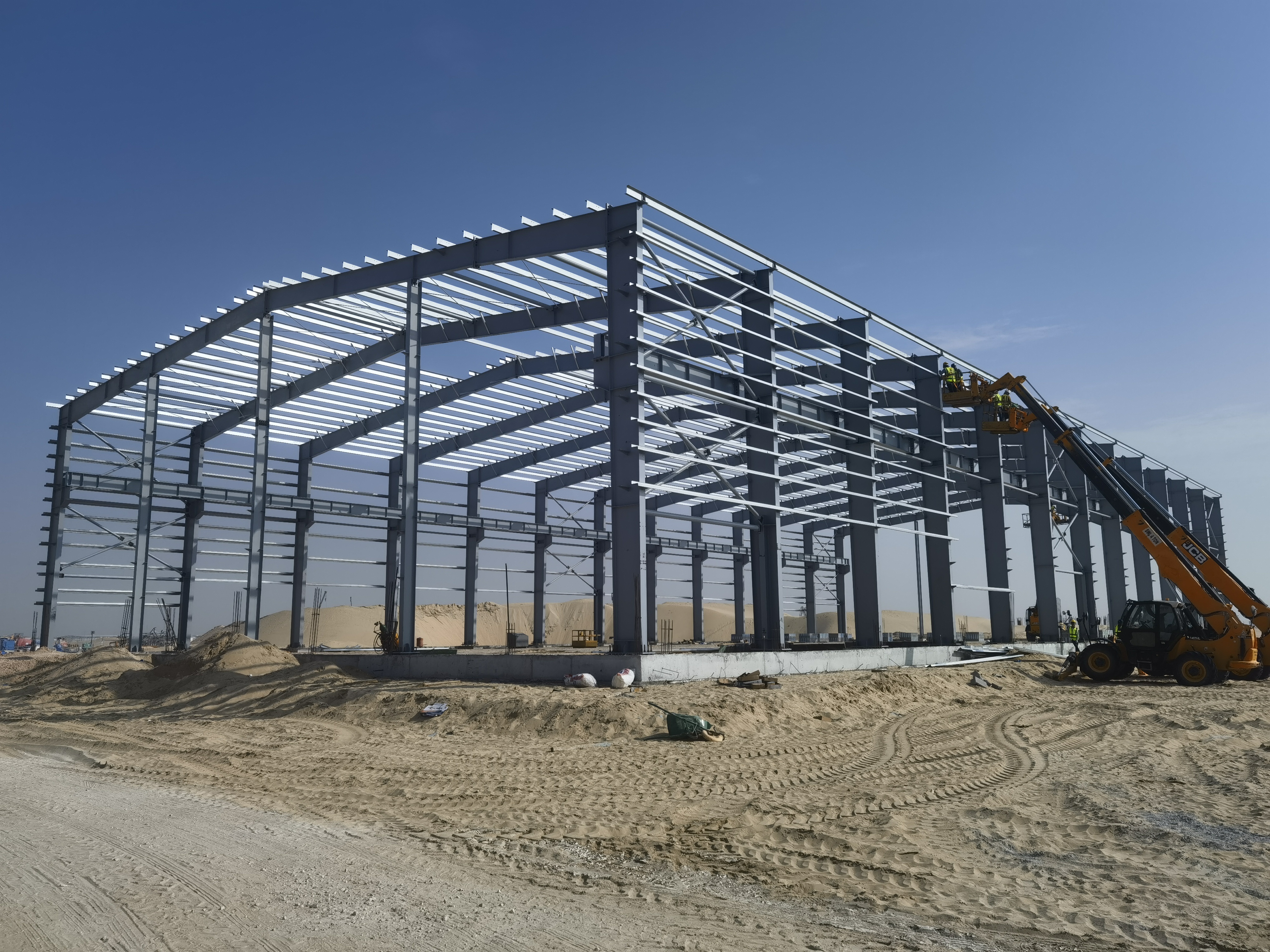
Data Insight: 40–60% Faster Structural Installation vs. Cast-in-Place Concrete
Industry benchmarks show steel warehouses achieve structural completion 40–60% faster than cast-in-place concrete—primarily by eliminating formwork setup and mandatory 28-day curing cycles, which collectively consume 10–15 weeks in concrete builds. A standard 50,000-sq-ft steel warehouse structure typically erects in five weeks versus 12+ weeks for concrete equivalents. Key timeline differences are summarized below:
| Construction Phase | Steel Warehouse | Cast-in-Place Concrete | Time Saved |
|---|---|---|---|
| Foundation to Frame | 3–4 weeks | 5–8 weeks | 30–50% |
| Weather-Delay Impact | Low | High | 15+ days |
| Mechanical Completion | 8 weeks | 14–18 weeks | 40–60% |
This compressed schedule enables earlier equipment installation and occupancy—converting months saved into measurable operational and financial advantage.
How Prefab Warehouses Multiply Speed Through Off-Site Integration
Prefabricated warehouses transform construction velocity by relocating critical manufacturing from the jobsite to climate-controlled factories. This strategic shift enables parallel progress across project phases—replacing sequential delays with synchronized execution.
Parallel Workflows: Simultaneous Foundation Work and Component Fabrication
While foundation crews prepare the site, structural elements—columns, beams, roof trusses, and insulated wall panels—are precision-fabricated off-site. This decoupling removes weather-related stoppages and bypasses the “cure-and-wait” bottleneck of poured concrete. Automated factory production ensures dimensional consistency, predictable output, and minimal rework—further safeguarding schedule integrity. Reduced material waste and tighter quality control also contribute to overall time savings.
Real-World Impact: 22,000-sq-ft Distribution Hub Delivered in 11 Weeks
A recent 22,000-square-foot distribution hub completed in just 11 weeks exemplifies this methodology’s impact. Pre-assembled wall sections and insulated roof systems arrived precisely as foundations cured—enabling immediate bolted connections. By synchronizing off-site fabrication with site prep, the project avoided sequential handoffs and cut on-site labor by 45% versus conventional steel erection. Most notably, it eliminated weather-related downtime entirely. Such outcomes confirm that prefab warehouses don’t just accelerate construction—they reset expectations for industrial delivery cadence.
Steel Warehouse and Prefab Warehouse: Clarifying the Overlap and Strategic Distinction
Industrial developers often conflate “steel warehouse” and “prefab warehouse,” leading to misaligned specifications. The distinction is foundational: steel warehouse refers to material—cold-formed or hot-rolled steel—offering inherent durability (50-year service life per ASTM International) and load-bearing capacity exceeding 150 PSF. Prefab warehouse, by contrast, describes a process: 70–90% of components are factory-built before on-site assembly.
| Dimension | Steel Warehouse Focus | Prefab Warehouse Focus |
|---|---|---|
| Core Advantage | Material durability | Methodology efficiency |
| Construction Scope | Material-specific solutions | Process-driven acceleration |
| Flexibility | Custom structural designs | Modular expansion capabilities |
The most powerful synergy occurs when prefabrication leverages steel components—merging methodological speed with material resilience. That’s why 78% of new industrial projects now integrate both approaches (Industrial Construction Review, 2023). Strategically, developers select based on priority: pure steel structures suit highly specialized load or longevity requirements, while prefab steel warehouses dominate time-sensitive deployments—like e-commerce fulfillment centers requiring occupancy within 12 weeks. Recognizing this distinction prevents specification errors and maximizes schedule compression.
Industrial Speed as Competitive Advantage: From Schedule Compression to Market Agility
Aligning Warehouse Delivery with E-Commerce Fulfillment Timelines
E-commerce success hinges on rapid order fulfillment—often within 24–48 hours—requiring strategically located, fully operational distribution centers ahead of peak demand. Traditional construction frequently misses these windows, forfeiting revenue and market share. In contrast, integrated steel and prefab solutions deliver occupancy 40–60% faster than conventional builds. This acceleration allows businesses to activate fulfillment hubs precisely when demand surges—during holiday seasons, product launches, or regional expansion—capturing revenue competitors lose to delay.
Speed-to-market has become a decisive differentiator: early entrants secure optimal logistics real estate and dominant regional network positions. Faster deployment also supports agile inventory repositioning as consumer behavior evolves. Ultimately, compressing construction schedules transforms facility delivery from a cost center into a strategic revenue accelerator—directly linking infrastructure speed to customer retention, margin resilience, and long-term competitive positioning.
FAQ Section
What are the key differences between cold-formed and hot-rolled steel for warehouses?
Cold-formed steel is lightweight, pre-punched, and pre-cut for rapid assembly, making it suitable for speed-critical single-story warehouses. Hot-rolled steel is better for heavy-load applications and multi-story projects but requires more complex welding and custom fitting.
How does steel compare to cast-in-place concrete in terms of construction speed?
Steel warehouses can be structurally completed 40–60% faster than cast-in-place concrete due to the elimination of formwork and curing cycles. This can save 7–10 weeks on average depending on the project size.
How do prefab warehouses enhance construction speed?
Prefab warehouses integrate off-site manufacturing, allowing parallel workflows for site preparation and component fabrication. This approach bypasses weather delays, ensuring synchronized execution and saving substantial time.
Can steel warehouses also use prefabrication methods?
Yes, combining steel with prefab methods maximizes speed and efficiency. Prefabricating steel components allows for synchronized project execution and further accelerates construction timelines.
Why is speed important for e-commerce fulfillment centers?
E-commerce demands rapid order fulfillment and operational facilities during peak seasons. Faster construction ensures timely activation of distribution hubs, aligning with market demands and capturing associated revenues.
Table of Contents
- Why Steel Warehouses Deliver Unmatched Structural Speed
- How Prefab Warehouses Multiply Speed Through Off-Site Integration
- Steel Warehouse and Prefab Warehouse: Clarifying the Overlap and Strategic Distinction
- Industrial Speed as Competitive Advantage: From Schedule Compression to Market Agility
-
FAQ Section
- What are the key differences between cold-formed and hot-rolled steel for warehouses?
- How does steel compare to cast-in-place concrete in terms of construction speed?
- How do prefab warehouses enhance construction speed?
- Can steel warehouses also use prefabrication methods?
- Why is speed important for e-commerce fulfillment centers?