EN
EN

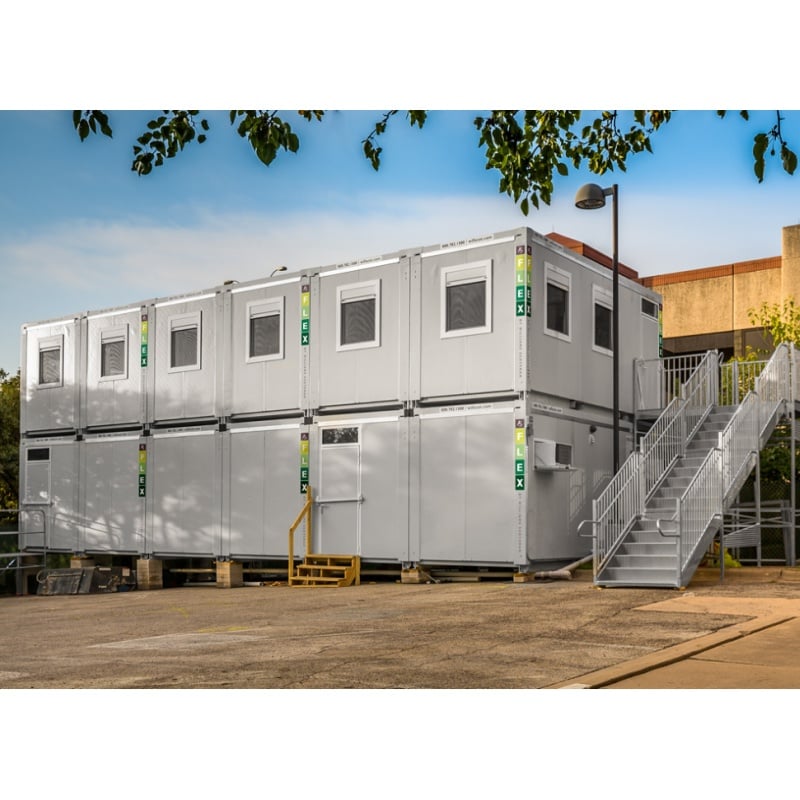
Prefab Military Buildings: Mission-Critical Infrastructure for Rapid Force Projection
Prefab military buildings are designed to provide fast, reliable infrastructure for defense operations in demanding environments. When mission timelines are tight and conditions are unpredictable, prefabricated construction offers a practical way to deliver functional spaces quickly. These buildings are especially valuable when military or government operations need secure, adaptable, and rapidly deployable facilities that support field readiness and long-term operational flexibility.
Ballistic-Rated and Code-Compliant Prefab Military Buildings for High-Threat Environments
In high-risk environments, infrastructure must do more than simply exist—it must help support safety, continuity, and resilience. Prefab military buildings can be designed with strong structural systems, secure envelopes, and protective features that make them suitable for demanding conditions.
Depending on the project, these structures may include reinforced walls, secure access points, climate control, and other protective design elements. Their factory-based construction also helps ensure consistency and quality across repeated units. For defense and security operations, this makes prefab buildings a practical solution when both speed and reliability are essential.
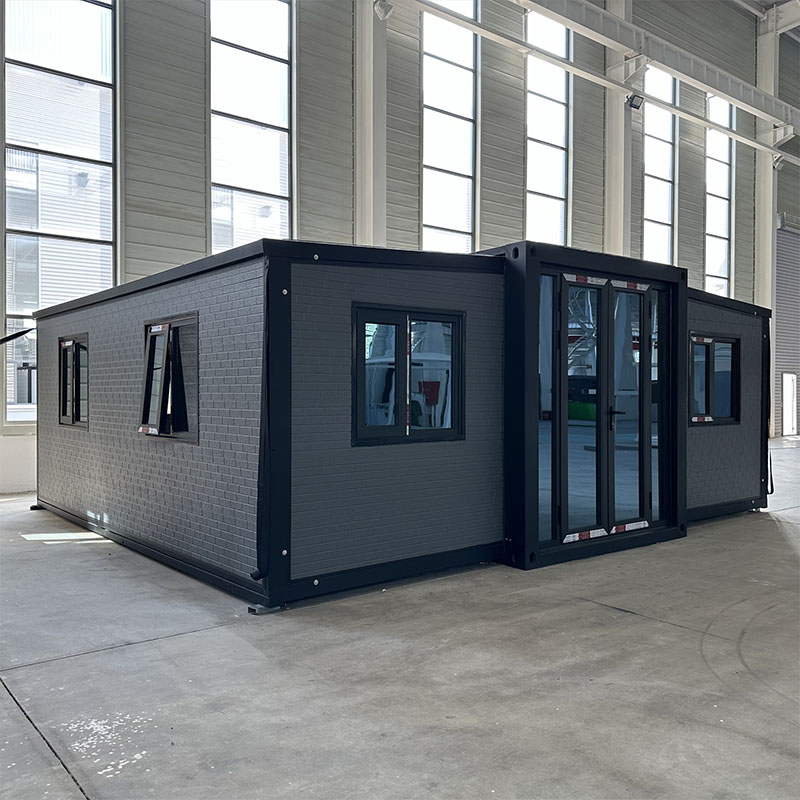
Modular Barracks and Command Facilities: Scalable, Deployable Housing and Operations Centers
One of the most common uses for prefab military buildings is personnel housing. Modular barracks can be scaled to support small teams or larger units, providing sleeping quarters, hygiene spaces, and common areas in a compact and efficient layout.
Prefab command facilities are also widely useful because they can be set up quickly and configured to support communications, administration, and operational planning. Their modular nature makes them adaptable to changing mission requirements, which is especially important in expeditionary or rapidly changing environments. As needs evolve, these buildings can often be expanded, reconfigured, or relocated with less disruption than traditional construction.
Government & Federal Applications of Prefab Modular Buildings
Prefab modular buildings are also valuable for government use beyond military operations. Federal and public-sector projects often require secure, efficient, and flexible facilities that can be delivered on short timelines. Prefabrication helps meet these needs by offering a more predictable construction process and a higher level of control during fabrication.
Secure Federal Facilities: SCIFs, Administrative Offices, and Controlled Spaces
In government applications, prefab modular buildings can be used for secure office space, controlled work areas, and other specialized facilities. Their modular structure makes it possible to plan layouts around security, privacy, and operational efficiency.
These buildings can also be adapted for controlled communications, administrative functions, and sensitive work environments. Because many components are completed in a factory setting, the resulting structure can offer better consistency and more reliable performance than many site-built alternatives.
Embassy and Consulate Infrastructure: Compliance, Security, and Diplomatic Agility
Prefab solutions are also useful in diplomatic and international settings, where buildings must balance safety, flexibility, and fast delivery. Embassies, consulates, and related facilities often need secure environments that can be adapted to different climates and operational demands.
Modular construction makes it easier to create buildings that support changing security needs, local site conditions, and long-term diplomatic use. This flexibility can be especially valuable in locations where conventional construction would take too long or require more disruption than is practical.
Rapid-Response Medical and Humanitarian Infrastructure Using Prefab Modular Buildings
Prefab modular buildings are highly effective in medical and humanitarian response because they can be deployed quickly and scaled as needs grow. In emergency situations, speed is critical, and prefabricated construction helps provide medical space, treatment areas, and support facilities without waiting for a full traditional build.
These buildings can be configured as clinics, field hospitals, testing centers, triage spaces, or temporary care facilities. Their modular layout also makes it possible to expand capacity when conditions change. For humanitarian projects, this flexibility helps provide practical support in a way that is both fast and organized.
Operational Lifecycle Considerations: From Temporary Deployment to Permanent Integration
Prefab modular buildings are not limited to short-term use. In many cases, they can serve as temporary infrastructure during an urgent response and later be adapted for more permanent use. This makes them especially valuable for organizations that need a structure with long-term flexibility.
Because modular buildings are built from repeatable components, they can often be maintained, relocated, reused, or reconfigured over time. This helps extend their useful life and reduce waste. For agencies and organizations managing evolving missions, prefab construction offers a practical balance between speed, durability, and lifecycle value.
Conclusion
Prefab military buildings provide mission-critical infrastructure that supports rapid deployment, security, and operational flexibility. Their use extends well beyond defense applications to government, diplomatic, medical, and humanitarian settings where time, resilience, and adaptability are essential. By combining factory-built precision with scalable design, prefab modular buildings offer a dependable solution for fast-moving, high-demand environments.
Frequently Asked Questions
What are prefab military buildings?
Prefab military buildings are factory-built structures designed for fast assembly and deployment. They are used to support defense operations, housing, command functions, and other mission-critical needs.
How do prefab buildings ensure security in high-threat environments?
They can be designed with reinforced structural systems, secure access features, and other protective elements that improve safety and resilience.
What applications do prefab modular buildings have for government use?
Prefab modular buildings can be used for secure offices, controlled spaces, administrative facilities, and other public-sector needs.
How do prefab buildings assist in humanitarian crises?
Prefab buildings can be deployed quickly to create medical, shelter, or support facilities in emergency and disaster-response situations.
Are prefab modular buildings sustainable?
Yes. Because modular buildings can often be reused, relocated, or repurposed, they can help reduce waste and improve long-term value.
Table of Contents
- Ballistic-Rated and Code-Compliant Prefab Military Buildings for High-Threat Environments
- Modular Barracks and Command Facilities: Scalable, Deployable Housing and Operations Centers
- Government & Federal Applications of Prefab Modular Buildings
- Rapid-Response Medical and Humanitarian Infrastructure Using Prefab Modular Buildings
- Operational Lifecycle Considerations: From Temporary Deployment to Permanent Integration
- Conclusion
- Frequently Asked Questions