EN
EN

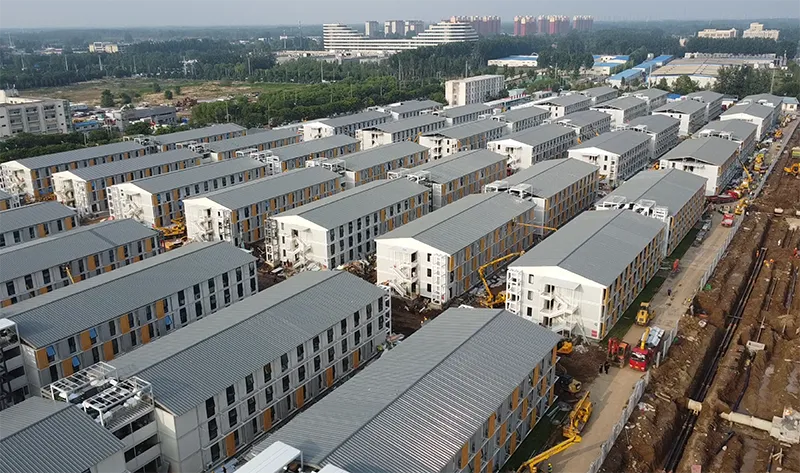
What Is a Construction Camp? Purpose, Scale, and Strategic Deployment
A construction camp is a temporary modular facility designed to house workers and support project operations near major work sites. Unlike permanent infrastructure, construction camps are typically planned for fast deployment and practical reuse, making them useful for projects that require temporary accommodation and on-site support in remote or infrastructure-limited areas. Their main purpose is to provide essential services such as sleeping quarters, dining areas, sanitation, medical support, and administrative space so that project teams can operate more efficiently.
The scale of a construction camp depends on the size and duration of the project. Some camps are designed for smaller teams, while others are built to support much larger workforces. Strategic planning usually focuses on mobility, scalability, compliance, and cost efficiency. These factors help determine whether the camp can be transported easily, expanded as needs change, and operated in a way that supports both workforce welfare and project performance.
Construction camps often function as practical operational hubs for large projects in remote areas. By combining living space, logistics support, and essential services in one location, they can reduce daily travel and help improve overall efficiency. In addition, their flexible design allows project teams to adjust the layout or capacity as operations evolve, whether that means adding more accommodation, expanding dining areas, or updating support functions as needed.
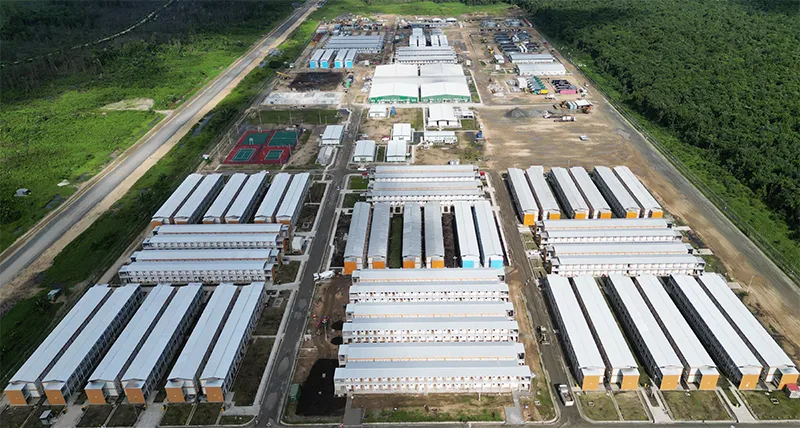
What Is a Construction Site Camp? On-Site Accommodation, Logistics, and Temporary Infrastructure
A construction site camp is a temporary accommodation and support facility built directly at the project location. It usually includes prefabricated modules such as dormitories, dining areas, offices, and sanitation units, all arranged to support daily operations on site. Because it is installed at the project location, this type of camp is often designed to fit the available land, utility connections, and local regulatory requirements.
Construction site camps are commonly used to reduce worker travel time and support productivity during active construction. They can be especially useful for remote or linear infrastructure projects where access to nearby housing and services is limited. Beyond lodging, site camps may also include management offices, kitchen facilities, and support spaces that help keep operations organized and responsive to daily project needs.
Key Differences Between Construction Camp and Construction Site Camp
Although the two terms are sometimes used in similar ways, construction camps and construction site camps are not exactly the same. A construction camp is usually designed with greater flexibility and reuse in mind, while a construction site camp is more closely tied to one specific project location. The difference usually comes down to how the facility is intended to be used, how long it is expected to remain in service, and how much relocation flexibility is built into the design.
Construction camps are generally better suited for projects that may move from one site to another over time. Their modular design can make relocation and reassembly more practical, especially when the same type of facility is needed for multiple projects. By contrast, construction site camps are usually built for a single location and are optimized for the specific footprint, layout, and utility conditions of that site.
The design intent of each facility type also differs. Construction camps are often built with long-term reuse and easier maintenance in mind, while construction site camps usually prioritize speed of installation and immediate project needs. This difference affects material selection, structural design, maintenance planning, and overall lifecycle strategy.
Client, contractor, and regulatory expectations can also vary between the two models. Construction camps often involve broader planning around logistics, scalability, and long-term operational use, while construction site camps are more focused on delivering a specific layout and meeting the immediate requirements of one project. In both cases, clear coordination helps reduce change orders, avoid delays, and keep the facility aligned with project goals.
When to Choose a Construction Camp vs. a Construction Site Camp
The choice between a construction camp and a construction site camp usually depends on project duration, site conditions, and operational flexibility. For remote projects that require accommodation over an extended period, a construction camp may offer more value because it can be scaled and adapted more easily. For projects in developed or regulated areas where the facility only needs to support one location, a construction site camp may be the more practical option.
In general, construction camps are better suited to projects that need flexibility, reuse, and broader logistical support, while construction site camps are better suited to fixed, location-specific operations. The right choice depends on the project’s timeline, accessibility, workforce size, and regulatory environment. When these factors are evaluated early, it becomes easier to select a solution that supports both efficiency and compliance.
Conclusion
Construction camps and construction site camps both play important roles in supporting major projects, especially in remote or temporary work environments. While they share some similarities, the difference lies in mobility, design intent, and long-term use. Understanding these distinctions helps project teams choose the right solution for their operational needs.
When planned well, both options can improve worker comfort, streamline logistics, and support project continuity. The best choice is the one that fits the project’s scope, schedule, and location requirements most effectively.
FAQ
What is the primary purpose of a construction camp?
A construction camp is designed to provide temporary housing and essential support services for workers near a project site. It helps improve convenience, coordination, and operational efficiency in areas where permanent infrastructure is limited.
How does a construction camp differ from a construction site camp?
A construction camp is generally designed with greater flexibility and potential reuse in mind, while a construction site camp is usually built for one specific project location. The difference mainly comes down to intended use, mobility, and long-term planning.
What factors determine whether to use a construction camp or a site camp?
The main factors include project duration, site accessibility, workforce needs, and regulatory requirements. Long-term remote projects often benefit from construction camps, while fixed-location projects may be better suited to site camps.
Are construction camps environmentally friendly?
They can be, depending on how they are designed and operated. Modular layouts, efficient utility systems, and sustainable planning measures may help reduce waste and support more responsible project development.
Can construction site camp modules be reused?
Some components may be repurposed, but construction site camps are usually designed around one specific location. Because of that, they are typically less flexible for relocation than modular construction camps.