EN
EN

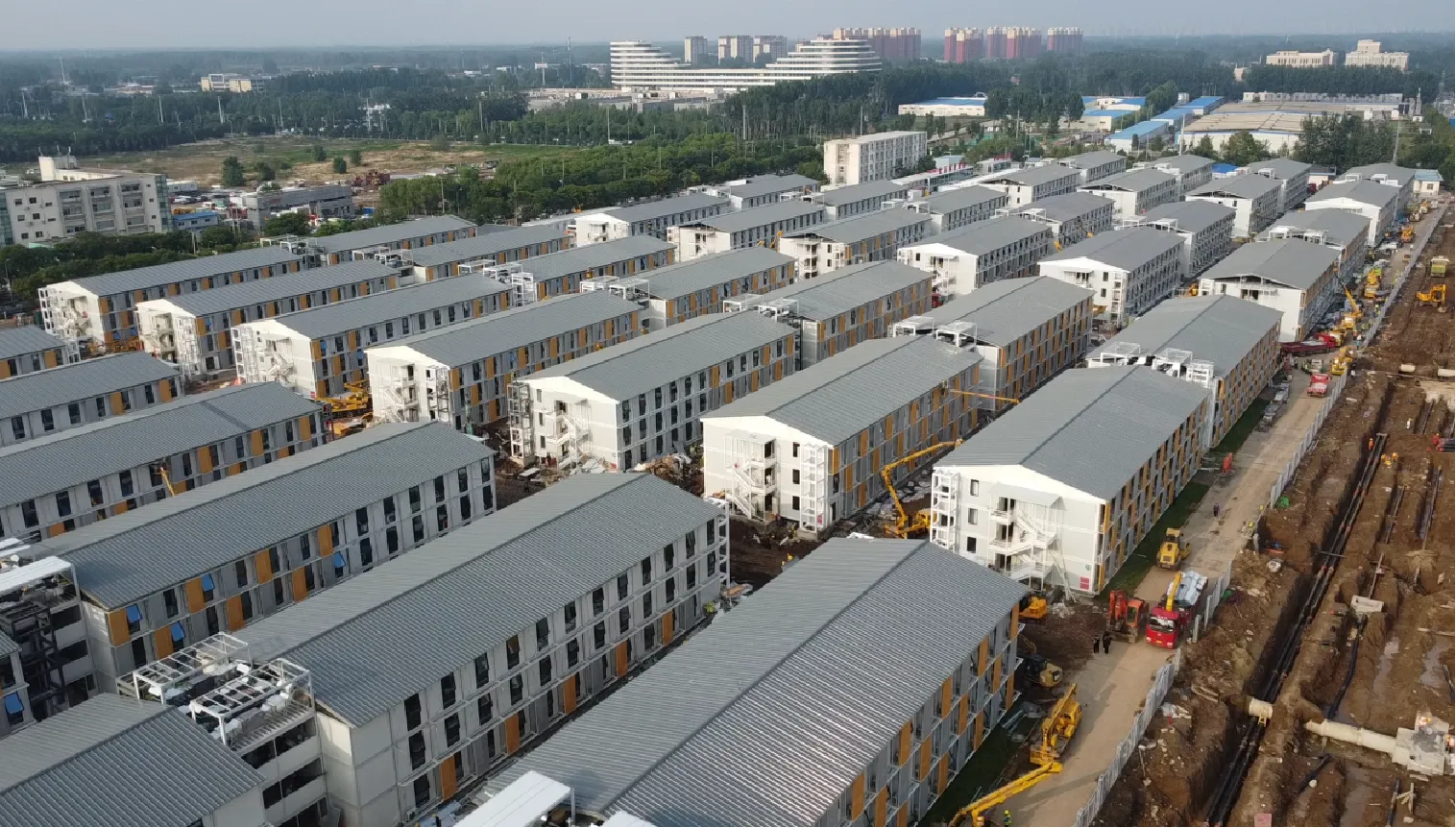
What Are Modular Accommodation Units?
Modular accommodation units are factory-built living spaces designed to be assembled on site with efficiency and consistency. Because much of the construction is completed in a controlled environment, these units can include structural framing, interior finishes, and essential building systems before they are transported to the project location.

These units are typically built as volumetric residential systems, meaning they arrive as complete three-dimensional modules rather than loose building components. This approach can help simplify installation, improve quality control, and support a more predictable construction process.
Accommodation modules differ from panelized and hybrid systems because they are more complete at the time of delivery. Instead of requiring extensive on-site assembly, modular units are usually finished to a higher level in the factory, which can make installation faster and more straightforward.
One of the key differences is completeness. Modular accommodation units are often delivered with major building systems already integrated, while panelized systems usually require more on-site work and coordination before they are ready for use.
Another advantage is deployment speed. Because much of the work is completed off-site, project teams can reduce on-site complexity and move toward occupancy more efficiently than with many conventional building methods.
Modular units are also designed to function as self-supporting building elements. This makes it possible to place, stack, or connect them in ways that support a wide range of layouts and project types.
The combination of speed, consistency, and installation readiness makes modular accommodation a practical choice for time-sensitive projects. It is often used for applications such as emergency housing, workforce lodging, and student accommodation.
Key Benefits of Modular Accommodation Units
Modular accommodation units offer several important benefits, including faster delivery, more consistent quality, and flexible application across different project types.
One of the main advantages of modular accommodation is faster project delivery. Because site preparation and factory production can happen at the same time, project timelines are often shorter than with traditional construction methods.
Modular project delivery benefits from parallel workflows. While the site is being prepared, the building modules can already be manufactured in the factory, helping reduce delays and improve schedule predictability.
Off-site manufacturing also supports stronger quality control and more consistent results. Factory conditions make it easier to inspect materials, maintain repeatable assembly standards, and reduce the kinds of issues that can occur more often on active construction sites.
These controls can also improve building performance. Better production consistency may contribute to improved thermal performance, stronger enclosure quality, and fewer installation issues during assembly.
Design Flexibility and Application Scope for Modular Accommodation
Modular accommodation units are used across a wide range of residential applications because they can be adapted to different project needs without losing efficiency.
These units can be adapted for student housing, workforce lodging, and multifamily residential projects. Their modular structure allows developers to create layouts that support privacy, shared amenities, and code compliance while still keeping the design flexible.
Modular accommodation also supports scalable deployment, from temporary facilities to long-term permanent modular construction. This flexibility makes it useful for both short-term needs and more permanent residential developments.
Temporary applications may include relocatable classrooms, emergency housing, or pop-up support facilities, while permanent modular projects can serve as long-term buildings with durable performance requirements. In both cases, modular construction gives project teams a practical way to expand capacity without starting from scratch.
In many projects, modular construction continues to be valued for its balance of speed, quality, and adaptability. Rather than treating these as trade-offs, modular methods make it possible to support all three within the same project strategy.
Conclusion
Modular accommodation units offer a practical and flexible approach to modern residential construction. By combining factory-built consistency with on-site efficiency, they provide a solution that can work for temporary, transitional, and permanent applications alike. For projects that need dependable quality, faster delivery, and adaptable design, modular accommodation remains a strong option.
FAQ
What are modular accommodation units?
Modular accommodation units are factory-built living spaces assembled on site for efficient residential use. They are typically delivered as complete modules with major components already integrated.
How are accommodation modules different from panelized and hybrid systems?
Accommodation modules are usually more complete at delivery than panelized or hybrid systems. This can reduce the amount of on-site work needed during installation.
What are the main benefits of modular accommodation units?
The main benefits include faster delivery, more consistent quality, and the flexibility to use the units in different residential settings.
Can modular units be customized for different residential applications?
Yes, modular units can be adapted for student housing, workforce lodging, and multifamily residential projects. Their layouts and finishes can be tailored to suit different requirements.
Are modular units suitable for both temporary and permanent structures?
Yes, modular construction can be used for both temporary and permanent applications. It is often chosen when projects need speed, flexibility, and reliable performance.
Table of Contents
- Key Benefits of Modular Accommodation Units
- Design Flexibility and Application Scope for Modular Accommodation
- Conclusion
-
FAQ
- What are modular accommodation units?
- How are accommodation modules different from panelized and hybrid systems?
- What are the main benefits of modular accommodation units?
- Can modular units be customized for different residential applications?
- Are modular units suitable for both temporary and permanent structures?