EN
EN

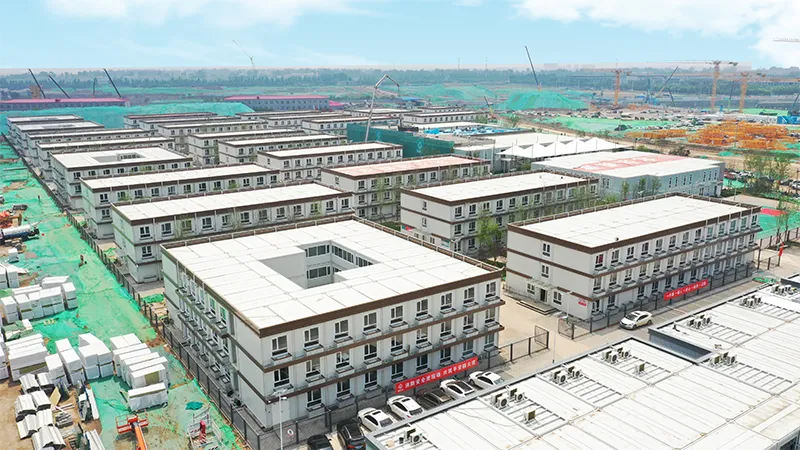
How Modular Camps Enable Rapid Deployment Through Off-Site Manufacturing
Modular camps are becoming an increasingly practical solution for projects that need fast, reliable accommodation in remote or challenging environments. By shifting much of the construction process off-site, these camps can be manufactured, delivered, and installed more efficiently than many traditional building methods. For industries that depend on speed, mobility, and dependable infrastructure, modular camps offer a smart way to support operations without long construction delays.

The Time Savings of Prefab Precision vs. Traditional On-Site Construction
One of the main advantages of modular camps is the ability to complete much of the work in a factory setting before the units ever reach the site. This makes the process more predictable and less affected by weather, labor shortages, or on-site sequencing issues.
Because the site can be prepared at the same time the units are being built, projects are often able to move forward more quickly overall. Factory production also helps improve consistency and reduce waste, while making it easier to maintain quality across multiple units. Compared with conventional on-site construction, this approach can significantly shorten the timeline and make mobilization much more efficient.
Integrated Design-Build-Logistics Workflows That Accelerate Mobilization
Rapid deployment depends not just on manufacturing, but on coordination. Modular camps work best when design, fabrication, and logistics are planned together from the beginning. This helps ensure that units arrive ready for installation and that site teams can connect the building systems with minimal delay.
Many modular camp systems are designed with pre-integrated mechanical, electrical, and plumbing features, which helps simplify final assembly. When transport, delivery, and on-site setup are all aligned, the camp can become operational much faster than a traditionally built facility. This is especially valuable in remote or time-sensitive projects where every day matters.
Modular Work Camps as Turnkey Life Support Systems for Remote Operations
In remote or extreme locations, modular work camps do more than provide shelter—they support daily life and project continuity. A well-designed camp can function as a complete support system for workers by bringing together accommodation, sanitation, power, and medical functions in one coordinated layout.
This integrated approach helps reduce the complexity of managing multiple separate facilities. Instead of coordinating several different contractors and systems, project teams can work with a more unified solution that supports comfort, safety, and operational reliability. For remote operations, that can make a major difference in both efficiency and workforce wellbeing.
Core Infrastructure: Accommodation, Sanitation, Power, and Medical Modules in One System
Modern modular camps are often built to include more than just dormitories. They may also contain sanitation blocks, treatment systems, backup power solutions, and basic medical facilities. This makes them more practical for long-term use in areas where infrastructure is limited.
By combining these essential functions into a single system, modular camps can support more independent operation and reduce dependence on outside services. This is especially useful in isolated sites where supply chains are difficult, weather conditions are harsh, or infrastructure is still under development.
Beyond Shelter: Renewable Energy and Water Management in Modular Camps
Many modern modular camps are also designed with sustainability and self-sufficiency in mind. Solar power, wind support, water reuse systems, and improved insulation can all help reduce operating demands while making the camp more efficient over time.
These features are especially useful in environmentally sensitive areas or in projects where long-term resource management is important. By using better energy and water systems, modular camps can become more adaptable and more responsible choices for remote deployments.
Mobility, Scalability, and Environmental Adaptation of Modular Camp Solutions
Transport-Ready Design for Different Site Conditions
Another key advantage of modular camps is their mobility. Because the units are designed for transport, they can often be delivered using a range of logistics methods depending on the site. This makes them suitable for difficult or isolated environments where conventional construction would be slow or impractical.
Standardized dimensions and structural details also make it easier to move the units from one project to another if needed. This gives modular camps a high level of flexibility and helps extend their value beyond a single deployment.
Climate-Specific Adaptations Without Sacrificing Scalability
Modular camps can also be adapted for different climates and operating conditions. In colder regions, designs may include stronger insulation and heating support. In hotter or drier areas, they may use reflective materials and improved ventilation. In humid or tropical settings, mold-resistant finishes and elevated foundations can help improve performance.
This ability to adjust the camp design while keeping the overall system modular is one reason these solutions work well across a wide range of environments. They offer a balance between standardization and customization, which is important for projects that must move quickly but still meet local requirements.
FAQ
What is the primary benefit of modular camps?
Modular camps offer fast deployment because much of the construction is completed off-site in advance, which helps reduce delays during installation.
How do modular camps achieve rapid site activation?
They are designed so that fabrication, transport, and site preparation can happen in parallel, making it easier to assemble and activate the camp quickly.
What makes modular camps suitable for remote operations?
They can combine accommodation, sanitation, power, and medical support in one integrated system, making them practical for isolated or infrastructure-limited sites.
Are modular camps environmentally friendly?
Many modern modular camps include energy-efficient and water-saving features that can help reduce operational impact and improve long-term sustainability.
Can modular camps be adapted to different climates?
Yes. Modular camps can be customized for different climate conditions, such as cold regions, desert environments, or humid locations, while still remaining modular and relocatable.
Conclusion
Modular camps enable rapid deployment by combining off-site manufacturing with integrated logistics, flexible design, and climate-adapted performance. They are especially valuable in remote operations where speed, reliability, and self-sufficiency are critical. With the ability to support workers, adapt to different environments, and scale as needs change, modular camps provide a practical and efficient solution for demanding projects.
Table of Contents
- The Time Savings of Prefab Precision vs. Traditional On-Site Construction
- Integrated Design-Build-Logistics Workflows That Accelerate Mobilization
- Modular Work Camps as Turnkey Life Support Systems for Remote Operations
- Core Infrastructure: Accommodation, Sanitation, Power, and Medical Modules in One System
- Beyond Shelter: Renewable Energy and Water Management in Modular Camps
- Mobility, Scalability, and Environmental Adaptation of Modular Camp Solutions
- FAQ
- Conclusion