EN
EN

Cost and Time Advantages of Modular House China Production
Modular house production in China has become increasingly attractive for global buyers because it combines cost efficiency, faster delivery, and large-scale manufacturing capability. With factory-based construction, streamlined logistics, and standardized production processes, Chinese modular housing suppliers can offer a practical solution for projects that need both speed and value. For developers, contractors, and international buyers, this combination makes China an important hub for modular building supply.
Labor, Material, and Economies of Scale Driving Lower Unit Costs
One of the biggest advantages of modular house China production is the ability to control costs more effectively. Factory-based workflows allow manufacturers to organize labor more efficiently, reduce unnecessary downtime, and improve overall productivity. Because production happens in a controlled environment, the construction process is often more precise and less wasteful than traditional site-based building.
Material use is also easier to manage in a modular factory setting. With digital planning, standardized cutting, and repeatable production methods, manufacturers can reduce excess waste and improve consistency across every unit. In addition, large-scale production helps spread fixed costs across multiple projects, which can make modular housing more competitive on a per-unit basis. These efficiencies make Chinese modular housing especially appealing for buyers looking for reliable performance at a more manageable cost.
Faster Project Delivery Compared with On-Site Construction
Speed is another major reason why modular house China projects are gaining attention. Unlike conventional construction, where almost every stage happens on the same site, modular building separates factory fabrication from on-site preparation. This means modules can be produced while the foundation and site work are being completed at the same time.
This parallel process can significantly shorten overall project schedules. It also reduces the impact of weather delays, labor shortages, and other common site-based disruptions. For buyers who need housing delivered quickly, such as developers working on commercial deadlines, emergency response projects, or temporary accommodation programs, modular construction offers a clear advantage in project timing.
Supportive Policy Landscape for Modular House China Export
China’s modular housing industry also benefits from a favorable industrial environment. Government support for prefabricated construction has helped encourage investment in technology, manufacturing capacity, and workforce development. This has contributed to a more mature supply chain and a stronger domestic base for export-oriented production.
For international buyers, this means access to manufacturers that are already familiar with large-scale modular production and global project requirements. The supportive policy environment has also helped improve standardization, which can make it easier for suppliers to deliver more consistent products to overseas markets. As a result, modular house China production is well positioned to serve both domestic and international demand.
Advanced Manufacturing and Standardization Readiness for Global Modular House China Supply
Chinese modular manufacturers have invested heavily in advanced production methods. Many factories now use digital design tools, automated cutting systems, and quality control procedures that support precision and repeatability. This helps ensure that modules are built consistently and can be assembled efficiently on site.
Standardization is another important strength. By designing modular homes with repeatable components and well-organized system connections, manufacturers can simplify shipping, installation, and long-term maintenance. This level of readiness is especially important for international projects, where buyers need products that can be adapted to different environments, regulations, and transport conditions.
Flat-pack container houses: standardized, compliant, and logistics-optimized
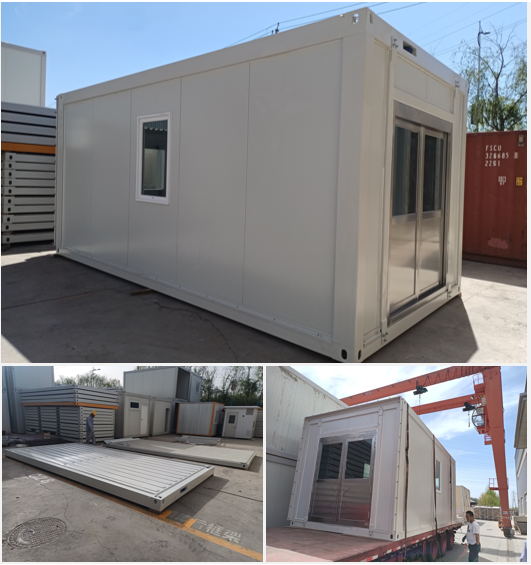
Flat-pack container houses are one of the most practical forms of modular housing for export. Their compact transport format makes shipping easier, while their standardized design supports efficient assembly at the destination site. For many projects, this allows for faster setup and better coordination across logistics, installation, and final use.
These units are often designed with utility integration in mind, making it easier to connect plumbing, electrical systems, and other essential services during installation. Their compact structure also helps reduce handling complexity during transportation, which is one reason they are widely used in overseas modular housing projects.
Proven Global Deployment and End-to-End Export Capability
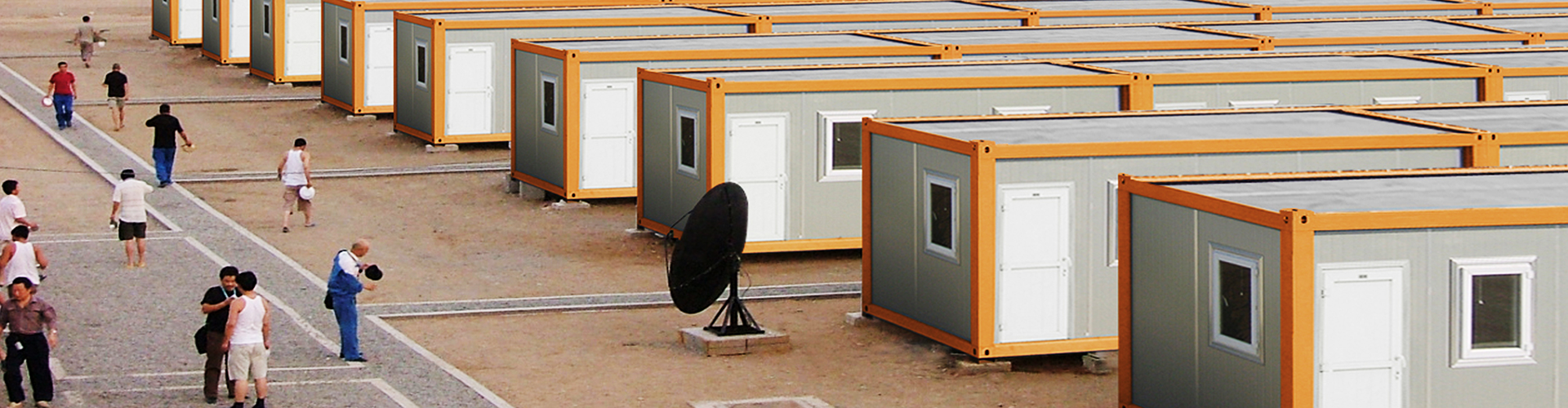
Chinese modular housing manufacturers have delivered projects across a wide range of international markets, including remote and challenging locations. This global reach reflects the maturity of China’s modular supply chain and the ability of manufacturers to support projects from production through shipping and final installation.
A strong export-ready system usually includes design coordination, manufacturing, packaging, customs preparation, and technical support during assembly. When these steps are managed well, modular housing projects can move more smoothly from factory to site, reducing project risk and improving delivery reliability. For buyers looking for a scalable and internationally practical solution, modular house China production offers a strong combination of experience, efficiency, and execution capability.
FAQs
What are the cost advantages of modular house production in China?
Modular house production in China leverages optimized labor, precision material management, and scalable production, resulting in significant cost reductions. Through factory-based workflows, labor costs are often reduced by up to 50%, while material waste is minimized by 30–40%. High-volume production further decreases per-unit costs.
How fast can modular construction projects be completed compared to traditional methods?
Projects leveraging modular construction in China can be completed 40–60% faster than traditional methods by concurrently fabricating modules indoors while site preparations occur, effectively reducing weather-related delays.
What policies support modular house exports from China?
China implements supportive policies such as the 14th Five-Year Plan targeting 30% prefabrication in new constructions by 2025. Additionally, export incentives include SEZ benefits, VAT rebates, and logistics subsidies.
Are modular homes from China globally compliant?
Yes, Chinese modular homes meet global compliance standards including CE Marking, ANSI/AISC 360, and AS/NZS 4600, making them suitable for various international markets.
Table of Contents
- Cost and Time Advantages of Modular House China Production
- Labor, Material, and Economies of Scale Driving Lower Unit Costs
- Faster Project Delivery Compared with On-Site Construction
- Supportive Policy Landscape for Modular House China Export
- Advanced Manufacturing and Standardization Readiness for Global Modular House China Supply
- Flat-pack container houses: standardized, compliant, and logistics-optimized
- Proven Global Deployment and End-to-End Export Capability